
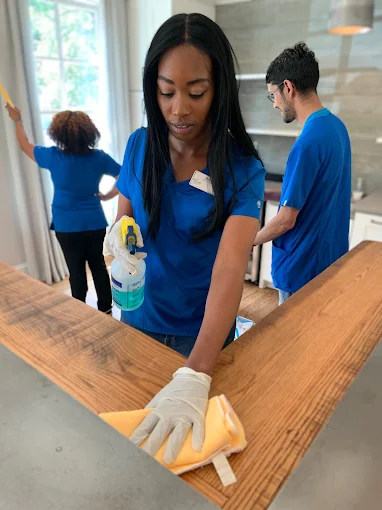
Move Cleaning, Then Deep Cleaning for Total Reset
A lot of Plano homeowners don’t realize how stressful a move-out date can be until the last week. You’re packing, coordinating utilities, scheduling repairs, and trying to figure out who will clean the house and make it look presentable for the next set of eyes—buyers, renters, or property managers.
We see this pattern constantly: people plan for a move-out clean, but they either (1) don’t have time for a true reset afterward, or (2) they clean “surface clean” only, then discover dust, grime, and buildup are still hiding behind appliances, in corners, and along baseboards. The result is extra scrubbing later—or a delay in move-in readiness.
That’s why the best approach is often simple: move cleaning first, then deep cleaning for a total reset. It gives you a clean foundation now, and a deeper reset that prevents the next household from inheriting the previous one’s buildup.
Quick Answer
For most moves, the cleanest (and least stressful) plan is:
- Move cleaning: Focus on rooms that will be inspected immediately—kitchen, bathrooms, floors, and visible surfaces.
- Deep cleaning: Follow with a whole-house reset—inside/outside of key areas, detail work around high-touch and high-buildup zones.
If you’re short on time, deep cleaning can happen first in the “hard-to-reach” areas, but in most cases move cleaning + deep cleaning is the most thorough and predictable route.
What People Often Miss During Move-Out Cleanings
During move-out cleaning visits, the work that takes the longest isn’t the obvious wiping—it’s the details that don’t show up until someone moves furniture or opens a cabinet.
Here are the things we commonly find during a move-out clean that people didn’t plan for:
- Kitchen grease that’s “invisible” until you shine a light (stove hood edges, cabinet fronts, backsplash grout haze)
- Bathroom buildup in the grout and caulk lines that looks fine at a distance
- Dust rings around vents and ceiling fans from normal HVAC circulation
- Baseboards and door frames that collect fingerprints and scuffs during packing
- Laundry room and utility areas where detergent residue and tracked dirt accumulate
One firsthand observation we rely on: even when a home looks clean on the surface, behind-the-scenes grime often behaves like a “timeline.” It’s usually there from months of living, and packing temporarily hides it. When you finally remove items or open the wrong drawer to grab a tool, it becomes obvious what needs deeper attention.
Our Experience Helping Busy Households (What Actually Works)
Consider this anonymized scenario we’ve seen across North Texas:
A family in Plano scheduled a move-out clean for the weekend before closing. They did a lot of packing during the week and left only “cleaning tasks” for Saturday. The move-out day looked great—until the buyer’s walkthrough focused on the kitchen corners and bathroom grout lines. The family had already cleaned surfaces, but they didn’t account for deep buildup.
What fixed it wasn’t more surface scrubbing. It was a two-step plan:
1. Move cleaning to get the home inspection-ready quickly (visible areas, floors, bathrooms, kitchen surfaces).
2. Deep cleaning afterward for the “inspection-level” details—inside cabinet edges, behind/around major appliances, and grout/track areas.
That approach reduced the last-minute scramble and made the home feel truly reset, not just “wiped down.”
Mistakes That Make Cleaning Harder
1) Cleaning only what’s visible
Surface cleaning can make a home look better instantly, but it doesn’t remove the residue that builds up in corners, grout, and around hardware.
2) Waiting until the final 48 hours
Packing creates dust. Boxes create scuff marks. Traffic increases as you search for essentials. If cleaning happens too late, you can end up cleaning the same areas twice.
3) “DIY deep cleaning” without a plan
A lot of homeowners start deep cleaning with the wrong tools or products for the surface—especially in kitchens and bathrooms. That can lead to streaking, residue, or missed buildup.
4) Forgetting inspection priorities
Move-out cleaning isn’t just about cleanliness. It’s about how the home looks and smells during walkthroughs. That means bathrooms and kitchens need attention even if you think the rest of the house is “fine.”
5) Not coordinating with move-in timing
If you’re moving into a new place right after, you’ll want a cleaning plan that supports the transition—so you don’t unpack into a home that still has buildup.
Cleaning Checklist (Move Cleaning → Deep Cleaning)
Use this as a practical guide to plan your reset. If you’re hiring help, it also helps you communicate priorities.
Move Cleaning Checklist (Inspection-Ready Priorities)
Kitchen
- Wipe countertops and backsplash
- Clean stove top and front surfaces
- Clean inside/outside of microwave and visible cabinet fronts
- Degrease sink, faucet, and handles
- Spot-clean floors in high-traffic areas
Bathrooms
- Clean toilet exterior thoroughly, including base area
- Scrub shower/tub surfaces and wipe down fixtures
- Clean sink, mirror, and faucet/hardware
- Wipe bathroom door frames and baseboards
Living Areas
- Vacuum and/or mop floors
- Wipe visible baseboards and door fronts
- Dust reachable surfaces (shelves, ledges, window sills)
Bedrooms & Hallways
- Vacuum/mop
- Wipe doorknobs, light switches, and frequently touched surfaces
Deep Cleaning Checklist (Whole-House Reset)
Detail work
- Clean vents and ceiling fan blades (where accessible)
- Detail clean baseboards, door frames, and corners
- Address dust buildup behind/around furniture edges
Kitchen & appliances
- Clean around and behind major appliances (as accessible)
- Degrease cabinet edges and hardware areas
- Deep-clean grout haze and built-up residue in kitchen corners
Bathrooms
- Deep scrub grout lines and detail caulk areas
- Clean inside cabinet bottoms and wipe hard-to-reach shelf edges
- Tackle mineral buildup where water sits
Floors & final touches
- Perform a thorough floor cleaning for trapped grime
- Spot-check high-touch areas again after floors are cleaned
If you want a structured approach for recurring or detailed maintenance, you can also reference cleaning checklists for room-by-room guidance.
Scheduling Recommendation: Build in Buffer Time
A schedule that tends to work best for moves:
- Day 1 (Move Cleaning): Focus on inspection-ready areas and visible surfaces.
- Day 2–3 (Deep Cleaning): Do the detail work—grout, baseboards, vents, appliance area cleaning, and hard-to-reach buildup.
- Final day: Quick walkthrough touch-ups (especially around bathrooms and kitchen surfaces).
If you’re in the middle of packing, aim to schedule move cleaning once most items are out of the way, but before the home looks “empty and dusty.” In Plano, where many households run busy schedules around school and commutes, adding buffer time prevents the “we cleaned but now it’s dusty again” problem.
For a deeper look at what’s involved, you can explore move cleaning services and deep cleaning services.
Comparison: Move Cleaning vs. Deep Cleaning
| Area | Move Cleaning | Deep Cleaning |
|---|---|---|
| Visible surfaces (counters, fronts) | Primary focus | Often revisited for detail |
| Floors | Thorough vacuum/mop + spot checks | Extra time on buildup and edges |
| Bathrooms | Inspection-ready scrubbing | Grout, caulk lines, detail areas |
| Kitchen | Degrease visible grime | Cabinet edges, corners, appliance area detail |
| Dust/vets/ceilings | Limited reach | More focus on vents, corners, high buildup |
| Time required | Typically faster | Usually longer due to detail work |
This two-phase plan reduces the chance of missing the “inspection-level” details that tend to matter most.
Signs It’s Time for Deep Cleaning
If any of these are true, a deep cleaning will usually make a noticeable difference:
- You can see dust lines around baseboards or window trim
- Bathroom grout looks dull or stained even after regular scrubbing
- Kitchen surfaces feel slightly tacky after cleaning (residue build-up)
- The home smells “clean” but not fresh—especially after cooking
- You’re preparing for a walkthrough and want the home to feel truly reset
Plano or North Texas Relevance: Why Moves Create Extra Buildup
North Texas homes deal with more than general everyday dust. Seasonal pollen, tracked dirt from shoes, and HVAC circulation can increase how quickly surfaces get coated—even when you’re “keeping up.”
In Plano neighborhoods, it’s also common for families to be in and out of the house all day: school drop-offs, errands, and weekend schedules. During a move, traffic increases while cleaning time decreases, which means dust and grime have more chances to settle into corners, vents, and grout lines.
That’s why the move cleaning + deep cleaning approach works well here: it accounts for the reality of busy schedules and the kind of buildup that shows up right when you need the home to look its best.
What Homeowners Should Know Before You Book
Before scheduling, gather a few basics so the cleaning plan fits your home:
- How soon is the walkthrough? (and whether it’s buyer, landlord, or property manager)
- Is the home empty or still furnished?
- Any known problem areas (e.g., grout discoloration, grease buildup, pet areas)
- Parking/entry access for the cleaning team
- Any priorities you want addressed first
If you’re also managing organization during the move, it helps to coordinate systems so clutter doesn’t immediately return. You can explore home organization services if you’re trying to streamline what goes where.
And if you’re balancing a move with a work schedule, some households also benefit from coordinated support—especially if time is tight. (If you’re interested in that kind of help, Clean Tu Casa can support you with practical home/errand support options.)
Ready to Simplify Cleaning or Organization?
If you want your move-out experience to feel controlled instead of chaotic, plan for it like a reset—not just a wipe-down. A move cleaning appointment gets you inspection-ready fast, and a deep cleaning follows to remove the buildup that typically gets missed.
About Clean Tu Casa
Clean Tu Casa provides residential and commercial cleaning, organization, janitorial, and move-related cleaning services throughout Plano, TX and surrounding North Texas communities. The company focuses on reliable service, detailed cleaning practices, and helping homeowners and businesses maintain cleaner, more organized spaces with practical recurring support.
FAQs
How often should homes be professionally deep cleaned?
Many homes benefit from a deep cleaning every 6–12 months, but timing depends on household size, pets, allergies, and how quickly dust and grease accumulate. If you’re in the middle of a move or preparing for a walkthrough, deep cleaning becomes a high-value “reset” step.
What’s included in move-out cleaning services?
Move-out cleaning typically focuses on making the home inspection-ready: kitchens, bathrooms, floors, and high-touch areas. A true move-out clean also includes detail attention to common buildup spots—especially in bathrooms and kitchen corners.
How long does a whole-house deep cleaning take?
Timing varies by home size, condition, and accessibility (furniture, appliances, and clutter). Many deep clean visits take longer than homeowners expect because the work includes detail tasks like corners, grout areas, edges, and hard-to-reach buildup.
Are recurring home cleaning services worth it?
Yes—recurring services often prevent buildup from reaching the “deep clean level.” Instead of waiting until dust and residue build up, you maintain a cleaner baseline. If you’re interested, you can also compare options through home cleaning services.
What areas are most commonly overlooked during cleaning?
The most commonly overlooked areas are baseboards, door frames, vents/corners, grout lines, and kitchen cabinet edges. These areas look fine until a walkthrough or close inspection reveals the difference.